Is It Time for a New Roof?
Most asphalt roofs in Central Ohio give out gradually and then all at once. You might notice shingle corners lifting and cupping, dark bare patches where the granules have worn off, or a handful of granules washing out of the downspouts after every rain. Inside, look for stains on the ceiling or damp spots in the attic.
A storm can also make the decision for you. When hail or wind has damaged a large part of the roof — roughly 40% or more — replacing it usually makes more sense than patching.
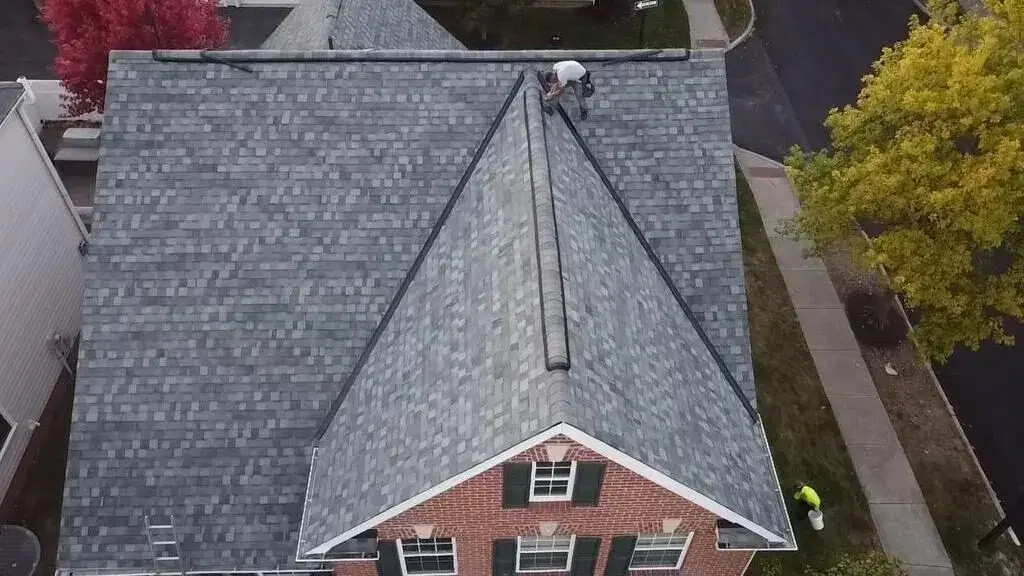
Not sure? That’s what the free inspection is for. We’ll get up on the roof, take pictures and show you exactly what we see.
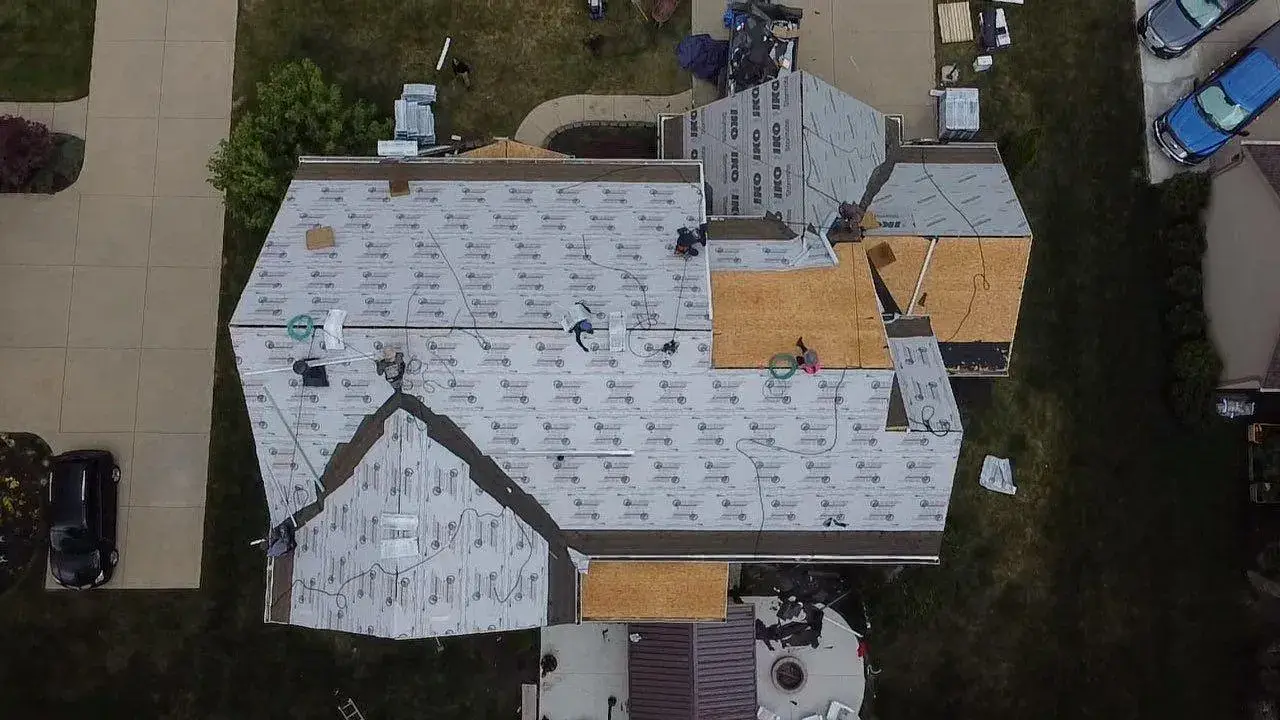
What Happens on Install Day
A typical J. Riley roof replacement goes like this:
- We protect your landscaping and siding, then remove the old shingles and underlayment.
- Any soft or rotted decking gets replaced so the new roof is fastened to solid wood.
- Ice and water barrier goes along the eaves and in the valleys, with underlayment over the rest.
- New flashing goes in around chimneys, walls, skylights and vent pipes.
- We make sure the attic can breathe, with intake and exhaust ventilation working together.
- Shingles, hip and ridge go on, and we walk the finished roof with you.
- Last, we clean up — debris, nails and all.
A Whole Roofing System
A good roof is more than the shingles you see from the street. We install complete systems such as the Owens Corning Total Protection Roofing System, where the leak barrier, underlayment, starter, shingles, ventilation and ridge are made to work together.
Want to picture colors first? Try our Build Your Roof tool to see shingle and siding combinations on a sample house before we come out.
Shingle or Metal
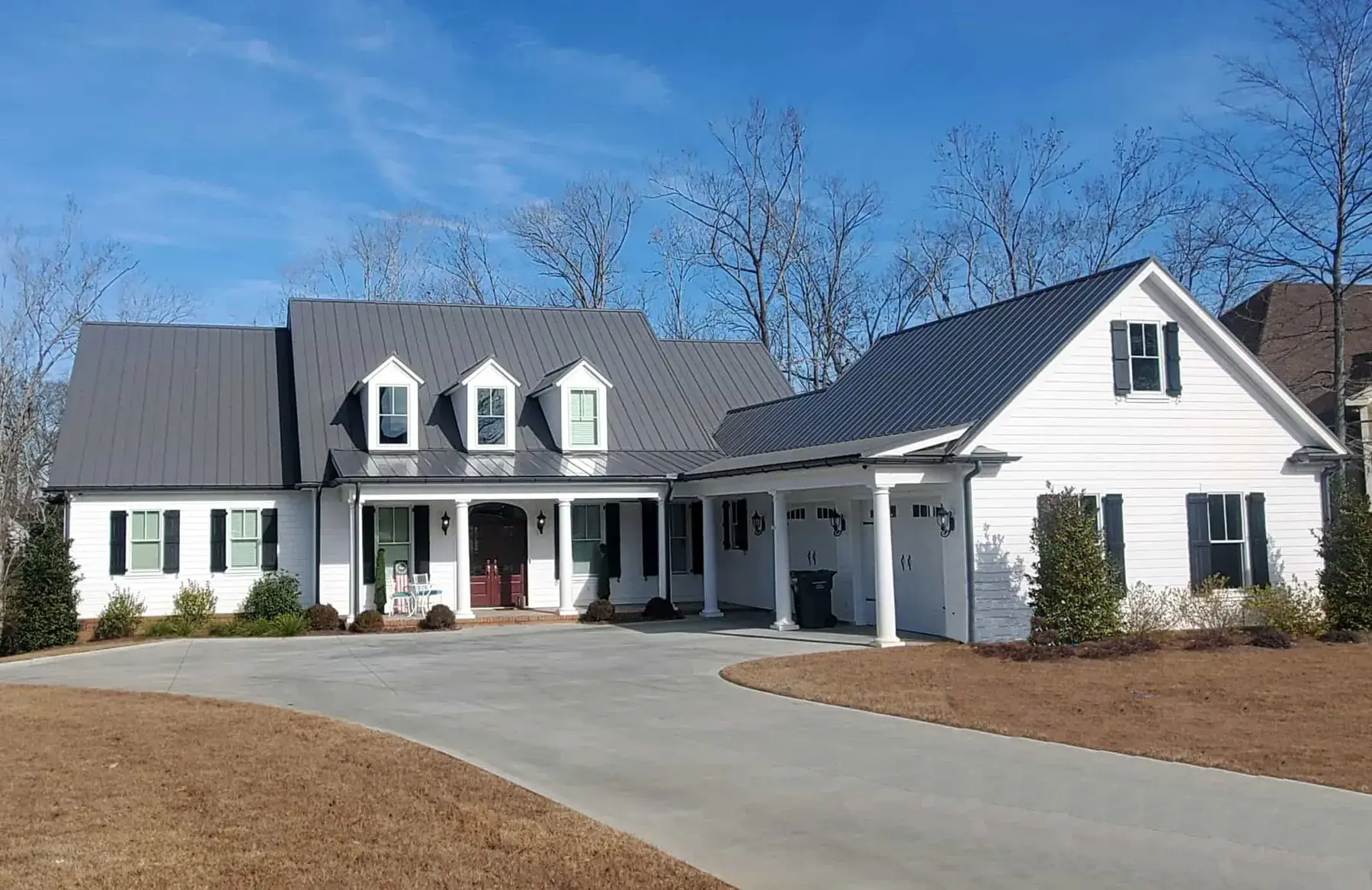
Most of our customers choose architectural shingles — they look great on nearly every style of home around here and come in plenty of colors. Some choose metal for the long life and the way it handles snow and storms. We install both, and we’re happy to talk through which fits your home and your budget.